ISO 9001
Quality management routines covering production consistency and corrective action tracking for tractor and implement lines.
About Kubota
Kubota’s story for growers is practical: machines shaped in controlled production environments, validated in field trials, and supported through dealer coverage that can explain hitch fit and parts response in plain language.
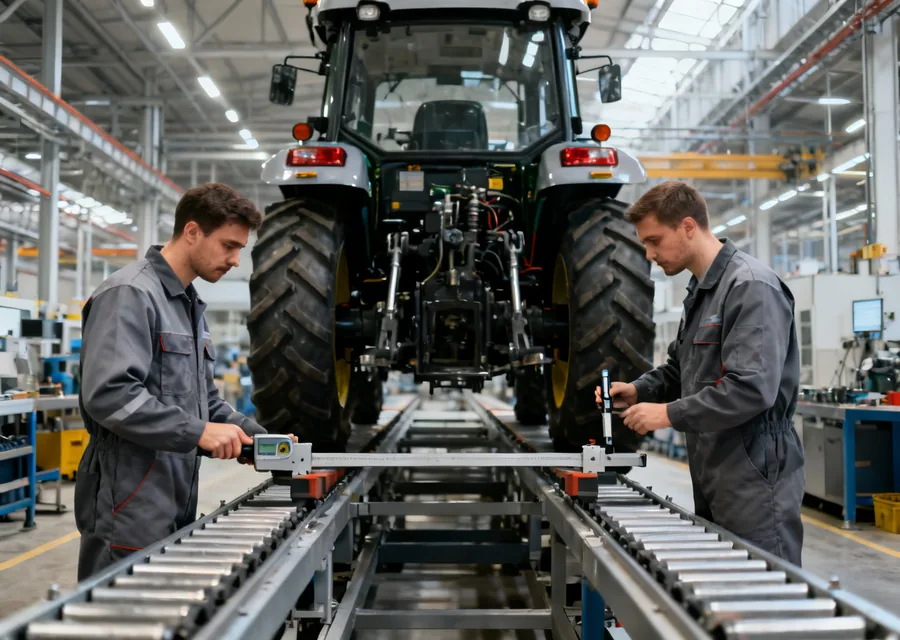
Production teams focus on chassis consistency, PTO alignment and hydraulic packaging so dealers are not improvising fitment in the yard. Parallel field trials exercise rotary tiller loads, loader cycles and transport speeds across soil types growers actually farm.
That combination matters when a farm owner is comparing compact geometry for orchard lanes against utility traction for open cultivation. The evidence trail is not a slogan wall—it is a set of measurable checks around horsepower delivery, cooling under draft load and implement interface clarity.
Practical limits stay visible: a compact chassis should not be forced into continuous high-draft rotary tiller work, and a utility package still needs local parts staging when dealer distance stretches peak-week response beyond 48 hours. ISO 9001 and CE Marking documentation are available for procurement reviews that require quality and conformity evidence before awarding a purchase order.
Documentation requests from agribusiness procurement usually include quality management, marking requirements and farm-operation alignment notes.
Quality management routines covering production consistency and corrective action tracking for tractor and implement lines.
Regulatory marking pathways for equipment destined to markets that require documented conformity evidence.
Guidance for growers who need machinery choices to fit farm assurance conversations around traceable field practices.
Where required, powertrain conversations include compliance pathways relevant to regional emission expectations.
Milestones below emphasize verifiable capacity—not empty mission statements—so procurement and farm managers share the same reference points.
Manufacturing programs standardize critical interfaces such as hitch geometry, PTO horsepower packaging and loader mounting so field dealers inherit fewer surprises at delivery.
Chassis families expanded so orchard lanes, livestock yards and open cultivation could share a clearer hitch and implement language instead of one oversized power unit for every chore.
Machines exercise rotary tiller draft, mower hours and livestock-yard loader cycles to surface cooling, ballast and wear patterns before broad deployment across mixed farms near the 40 ha planning band.
Dealers translate crop plans into tractor packages, including implement shortlists with working-width notes near 24 m for larger tools, grain moisture checkpoints around 14%, fertigation timing and commissioning appointments before financing locks.
Share your crop plan and we will help connect you with documentation and dealer guidance that match your next equipment decision.
Contact Kubota